
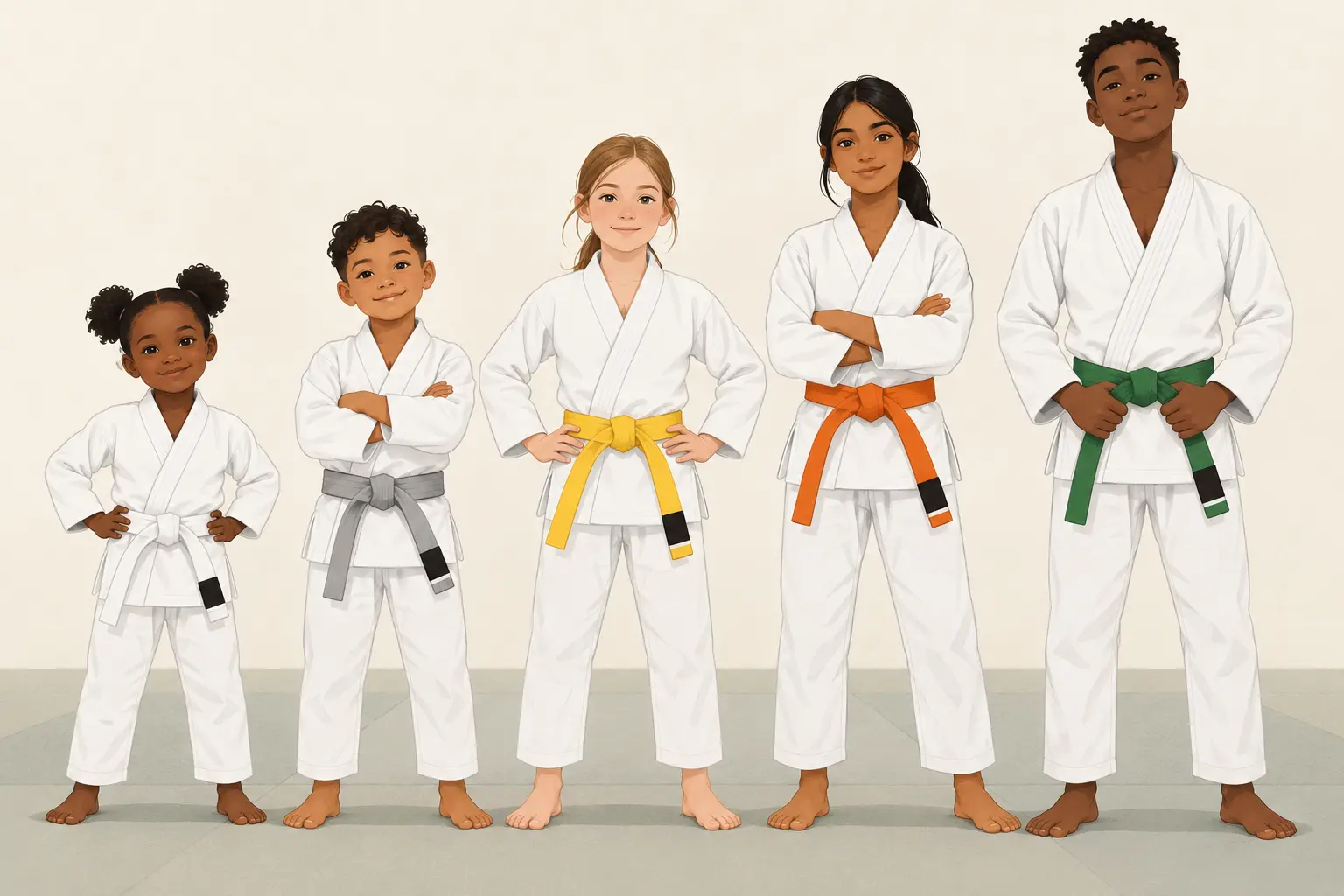
Why we changed
Progress should be earned, not expected.
For years we ran a monthly grading system. Once a month we held a test week, and at the end of it, stripes went out.
It worked, in the sense that it was predictable. But after several years we noticed a pattern we couldn’t ignore. Children began to expect stripes rather than earn them. Test week became something to copy your way through rather than something to prepare for.
When we tried to raise the standard, to stripe fewer children and mean it more, it was met with disappointment, because the system had quietly taught everyone that a stripe was a monthly event.
What replaced it
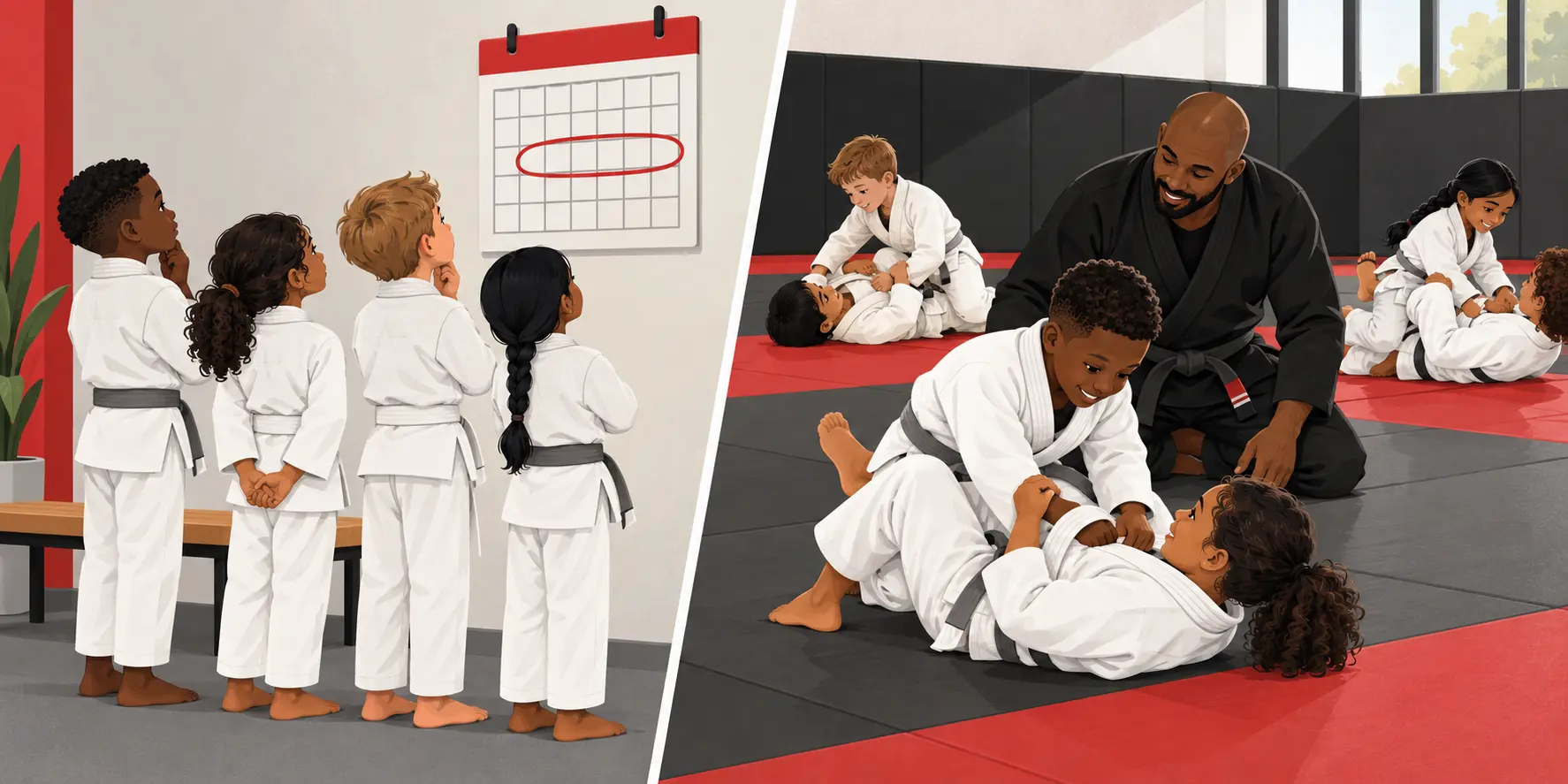
Normal training now tells the full story.
Grading now happens on merit, in normal class, as part of normal training.
There is no test week. There is no grading day. Your child’s coaches assess them in every single class they attend. By the time a promotion decision is made, they have already seen weeks or months of evidence. There is nothing to cram for and no single moment that decides everything.
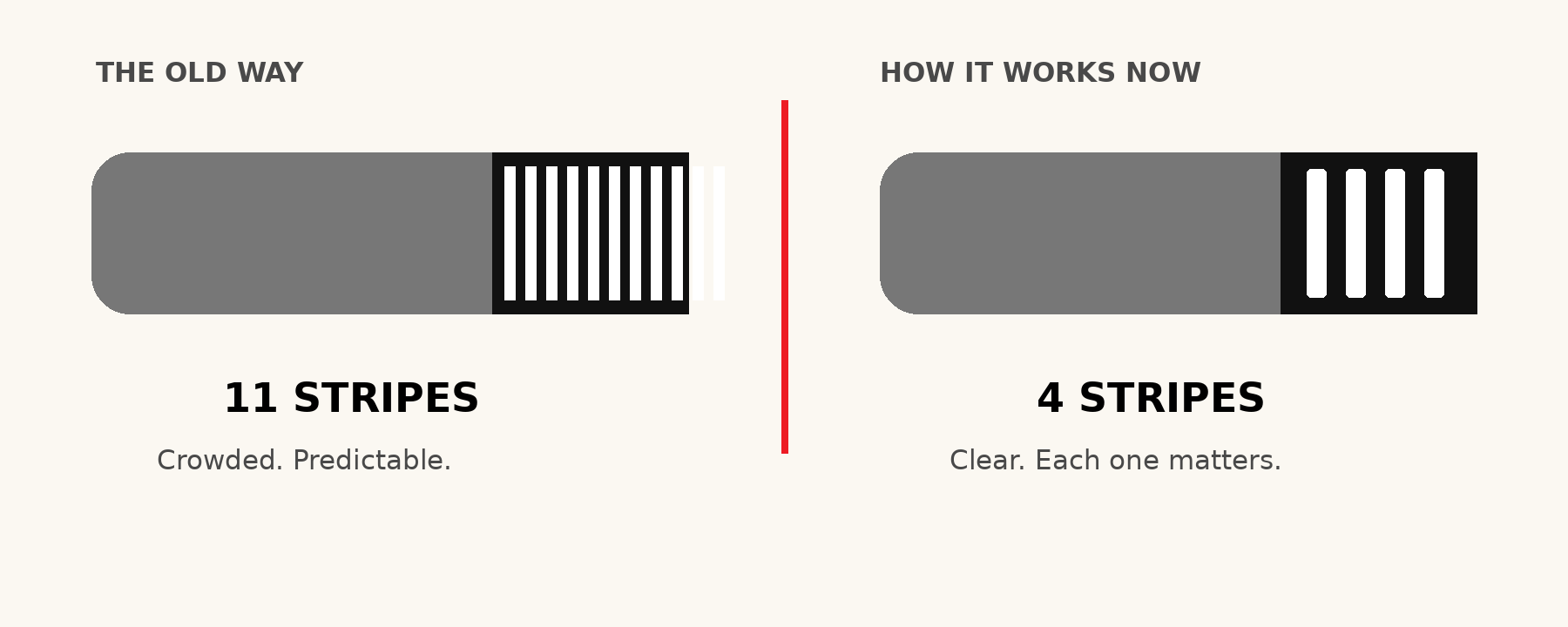
Every belt now carries four stripes rather than eleven. Fewer stripes, each one meaning considerably more.
The old way
- Monthly test week
- Stripes at the end of the month
- Up to 11 stripes per belt
- Everyone graded at once
- Prepare for the test
How it works now
- Assessed every class, all year
- Stripes when the child is ready
- 4 stripes per belt
- Individual, when earned
- Just train
In practice, one or two children may receive a stripe or belt during an ordinary class. It is a real moment of recognition, earned through their own development and surrounded by the training partners who were there for the work.
The three things we’re watching
Three areas. Equal weight.
01
Behaviour
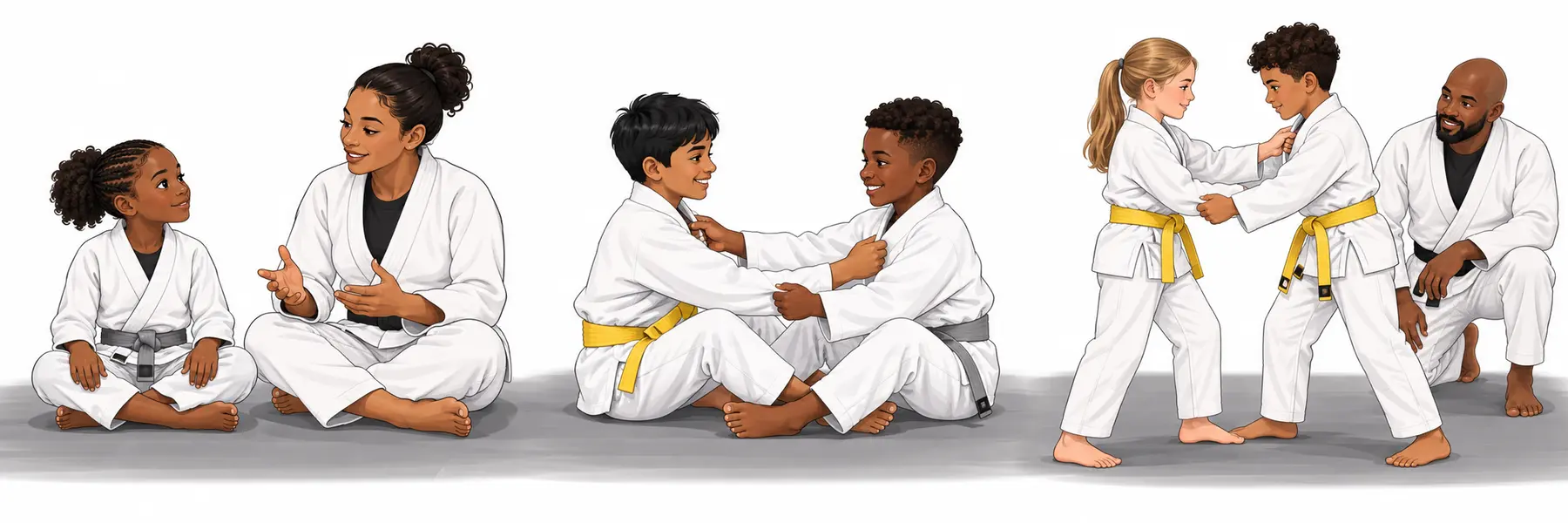
Rules, respect, sportsmanship and age-appropriate emotional control. We do not expect perfection. We expect effort and growth. A five-year-old may be learning to sit still while a coach speaks; a fourteen-year-old should lead by example.
Non-negotiable
Three things stop a promotion outright
Our expectations are age-appropriate. Younger children will need reminders, and we do not expect perfect behaviour. These three issues are different because they affect safety, respect and whether a child can be trusted at the next level.
Tapping
Where tapping forms part of their training, a child must tap when needed and release another child immediately when they tap. Ignoring or refusing to respect a tap is unsafe. A child who cannot do this will not be promoted.
Defiance and disrespect
Needing an occasional reminder is normal. Repeatedly refusing instructions, deliberately ignoring a coach or showing blatant disrespect is not. A child who will not listen or respond appropriately when corrected will not be promoted, regardless of their technical ability.
Bullying
Bullying is repeated or deliberate behaviour intended to intimidate, humiliate, exclude or hurt another child. A disagreement, isolated unkind comment or mutual teasing is not automatically bullying. We address all poor behaviour, but a child who bullies will not be promoted.
White-belt progression
Your first four stripes — the white-belt journey
White belt is where a child learns how to train. These first four stripes recognise the development from being completely new to becoming ready for the first coloured belt.
They have settled in, know how class works, where to line up and what is expected. They have shown real improvement since their first session. They can tap and respect a tap.
After white belt, the stripe number continues to show progress, but it is no longer the whole explanation. The child is now being measured against the standard of the next belt.
Coloured-belt progression
The belt sets the standard
After white belt, the stripe number tells us how far a child has progressed through their current level. The belt tells us what that level requires. A first stripe on a grey belt is therefore not judged against the same technical picture as a first stripe on a yellow belt.
As the belts change, we expect greater technical depth, stronger live application, more independence and a higher standard of behaviour.
Within each colour family, the white-panel belt introduces the level, the solid belt establishes it, and the black-panel belt refines it in preparation for the next colour.
Choose a belt within the grey family
Grey family · Foundations that hold up
Grey/White: entering the grey system
Behaviour
They can participate safely, follow the class routine with less prompting and listen to different coaches. Tapping, respecting a partner’s tap and treating training partners properly are firmly established.
Competitive development
They are willing to engage in live training, try to improve their position and make an honest effort to win. They are beginning to understand that a round can be won through points or submission without becoming reckless.
Technical ability
They recognise the main positions and understand the basic goal from the top, guard and bad positions. Passing, sweeping, escaping, controlling and submitting safely are beginning to look like connected jiu-jitsu rather than isolated movements.
Supporting the three pillars
Life skills in practice
Discipline, focus, body control and safe teamwork should now be visible without constant reminders.
How stripes work inside coloured belts
The stripe is always relative to the belt
Once a child holds a coloured belt, the four progression stripes do not represent four identical technical tests. They show how far the child has progressed towards the next belt’s standard.
A fourth stripe on a Grey/White belt is measured against Grey-belt readiness.
A fourth stripe on a Grey belt is measured against Grey/Black readiness.
A fourth stripe on a Grey/Black belt is measured against Yellow/White readiness.
The same belt-relative principle continues throughout the coloured belts.
First stripe — “Settling into the level”
Clear development is appearing inside the current belt.
Second stripe — “Becoming more consistent”
The required habits and skills are appearing more regularly.
Third stripe — “Holding up under pressure”
The child is showing deeper, more dependable development in training.
Fourth stripe — “Approaching the next belt”
The coach is now assessing whether the child is close to the next belt across behaviour, competitive development and technical ability.
A stripe says, ‘You are progressing inside this level.’ A belt says, ‘You can now live safely and confidently at the next level.’
The last stripe
Four stripes is not the next belt.
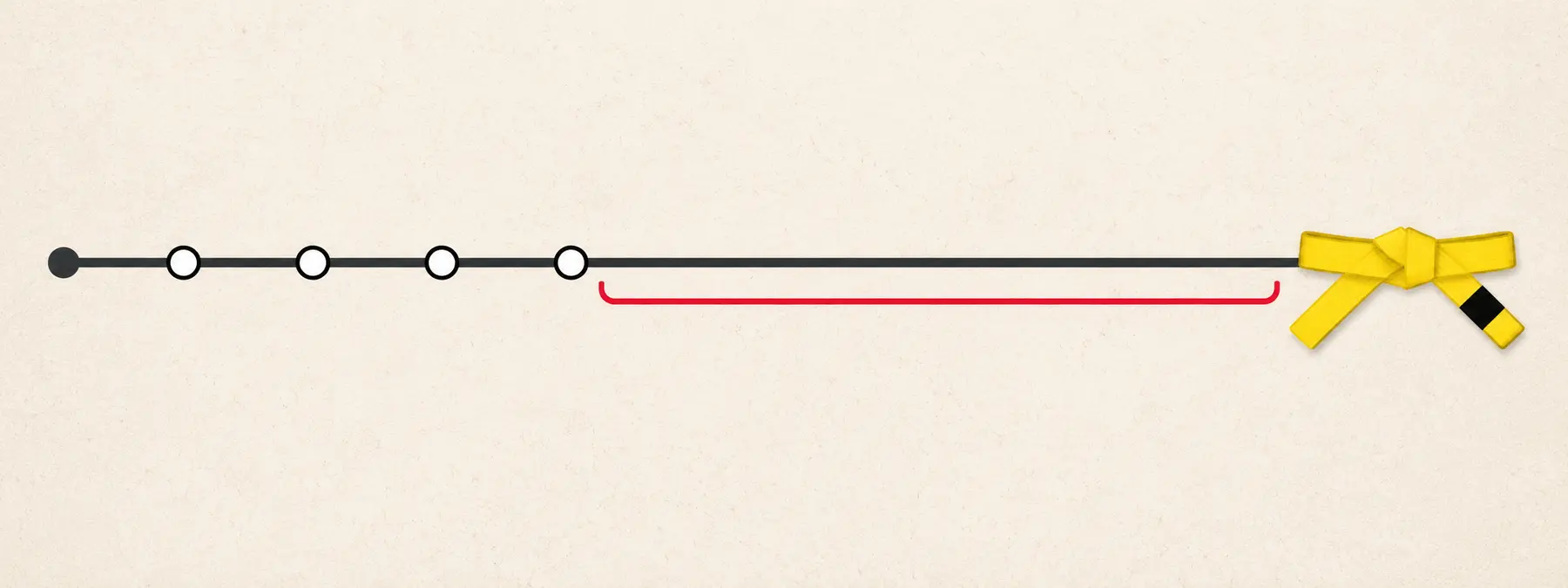
This is the single most common misunderstanding, so we want to be direct: your child will not automatically receive a belt because they have reached four stripes.
The gap between the fourth stripe and the next belt is deliberately the longest wait in the entire system. A belt is a far deeper review than a stripe. It may take several more weeks or months. That is by design, not by oversight.
How long does it take?
10–16months is a guide for a coloured belt with consistent training, not a schedule.Longer than most people expect, and there is no due date. We think in sessions, not months. A child training twice a week builds skill roughly twice as fast as a child training once, so the honest answer depends far more on mat time.
Minimum times are floors, not triggers: eligibility to be considered never means a belt is owed.
We review every child’s progress roughly every three to four months. That is a promise about attention, not outcome. Nobody gets forgotten. If your child is not moving, we will notice and tell you what they are working on.
Different children. Different speeds.
The same standard.
Why green belt means so much
Not every child reaches green belt, and that is the point.
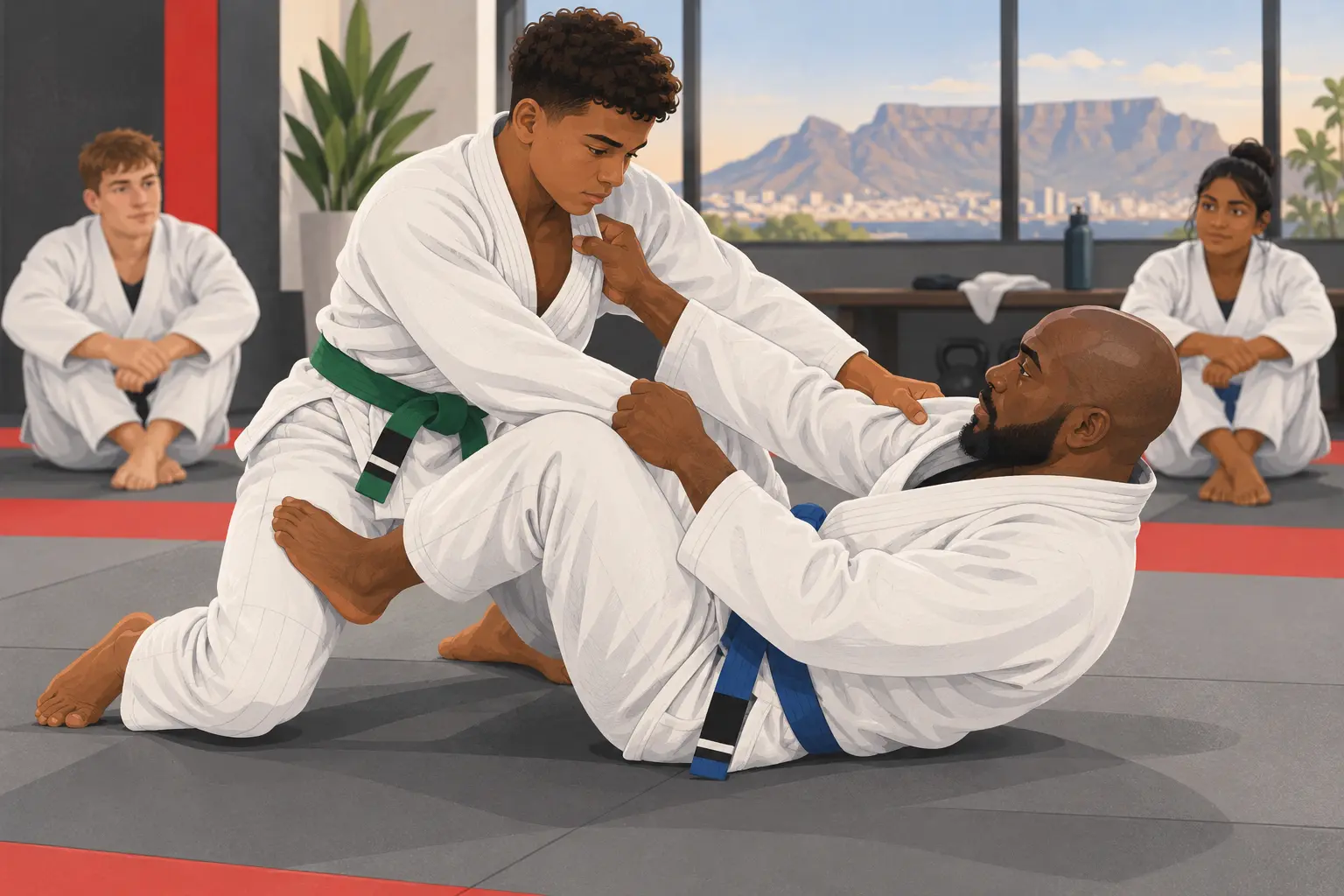
A green belt in our kids programme is the equivalent of a purple belt in the adult system. A teenage green belt is a serious grappler, someone who will give an experienced adult blue belt real trouble. That standard is why the belt means what it means.
Most children will not get there, and that is not a failure. Some develop quickly and some slowly. A child who starts at five may still find each belt hard-won. Your child is measured against who they were six months ago, never against the ceiling and never against the child next to them.
Age and belt rank are not connected.
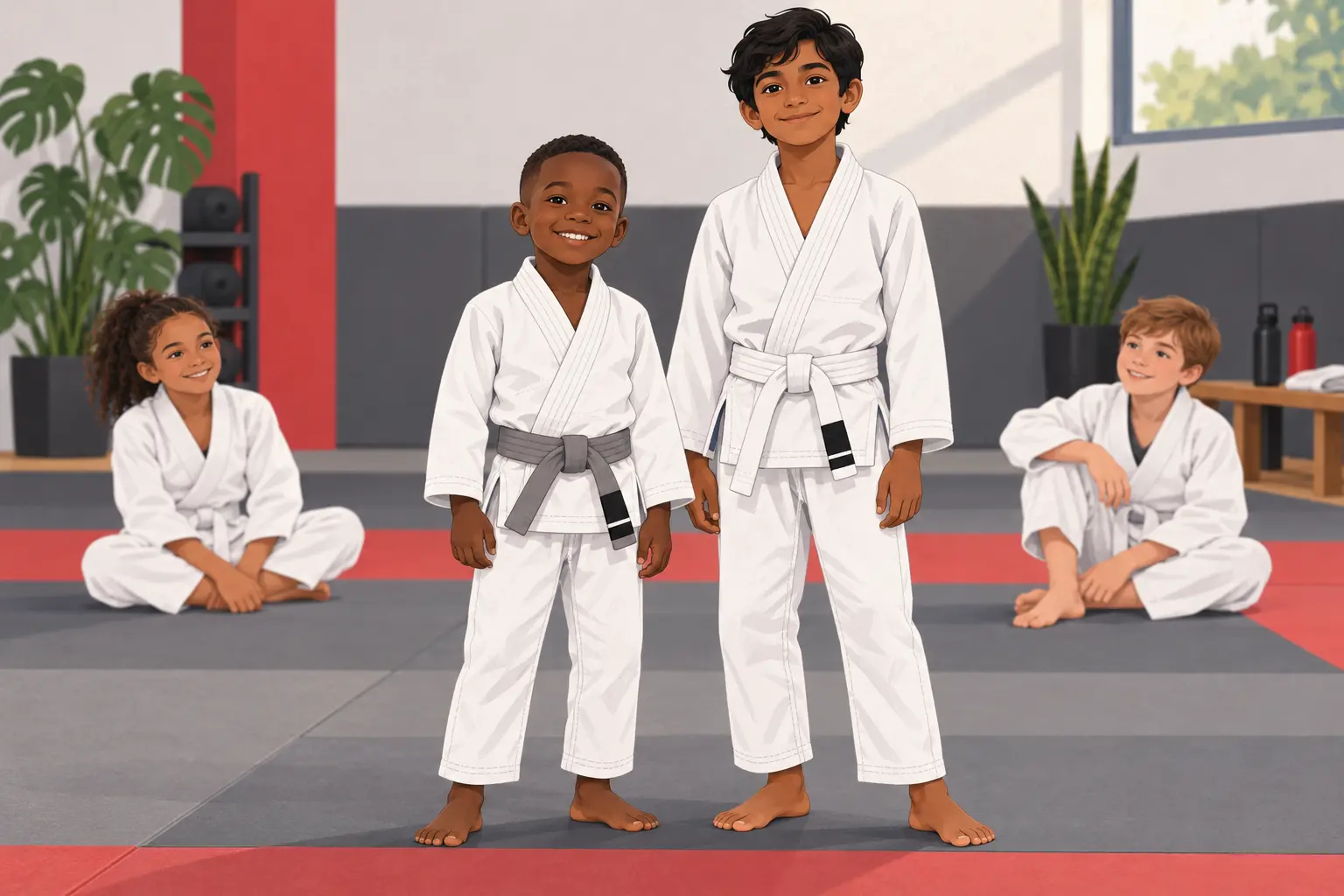
A seven-year-old training consistently for two years will often outrank a twelve-year-old who joined last month. Belt colour reflects training, not age.
Children progress at different speeds.
Some need longer at a level. Some move quickly in one area and slowly in another. Everyone has something to work on, and the coach will tell you what that is if you ask.
Moving up an age group often brings a dip.
The pace, intensity and strength of other children change. The struggle is expected, temporary and part of growth.
Age groups
Age starts the placement conversation.
Size, safety and behavioural readiness matter too. Where a child is significantly bigger than their age group, we may move them up for safe, enjoyable training and will always speak to you first. Placement cannot be reduced to a single number.
The belts
The road to blue.
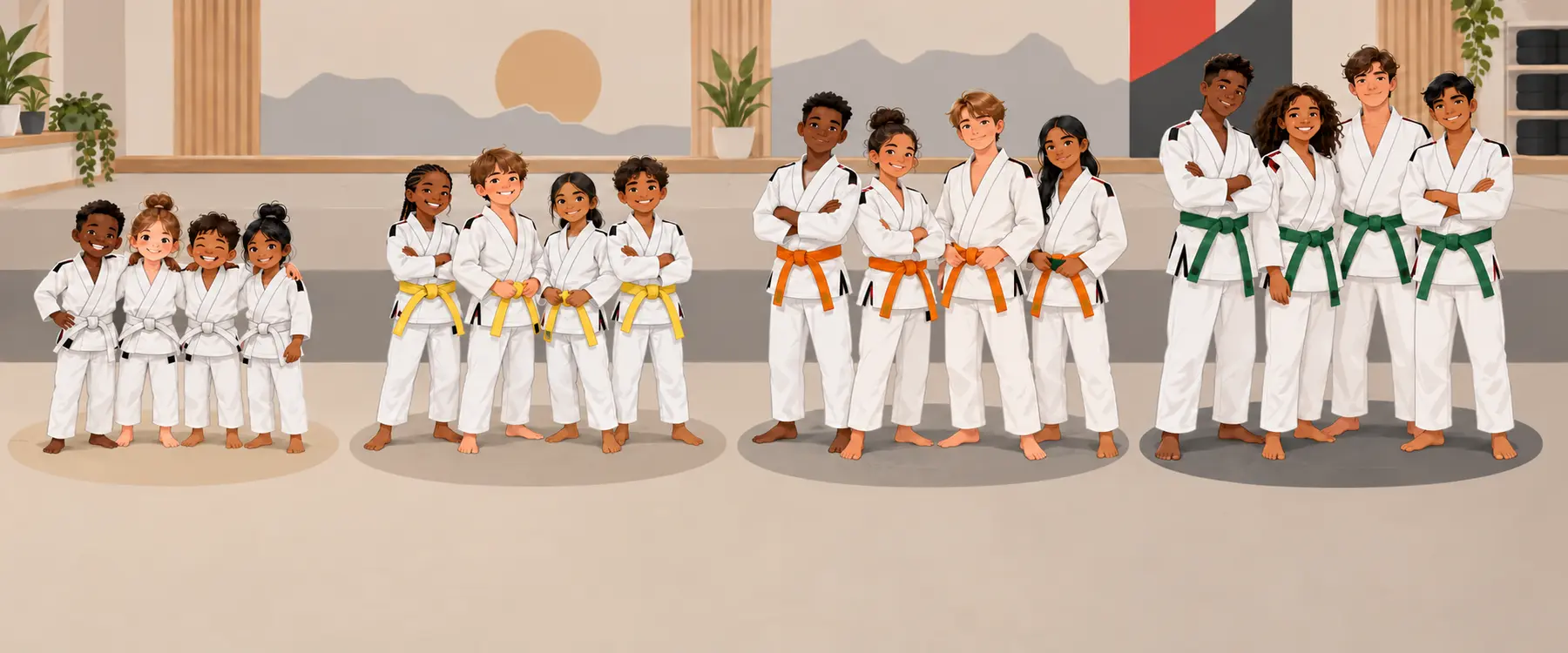
Iron Grip uses the full IBJJF kids belt system.
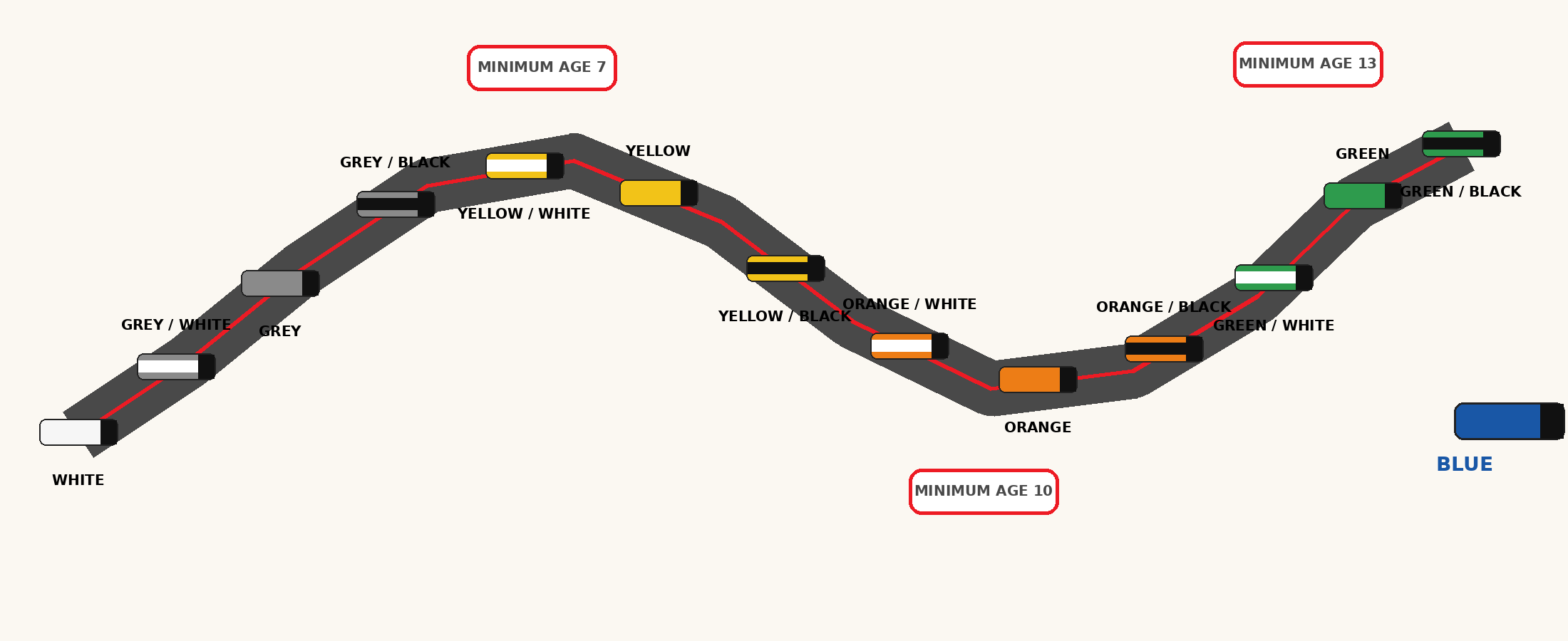
What varies is time, not sequence. Some children move quickly through one belt and sit longer on the next. That is normal and individual.
These minimum ages are set internationally, no matter how skilled the child is. If a child is ready before they are old enough, we will tell you and keep recognising progress while they wait.
How far will my child get?
That depends on when they started and how consistently they trained. A child starting between five and seven and training consistently can reach green before 16. A child starting at twelve will not, and that is completely fine. We are developing the art and the skill, not racing anyone to a colour.
What happens at 16?
In the year your child turns 16, they keep the belt they have earned. Nothing is automatically converted or exchanged. We separately assess readiness for adult classes based on size, maturity and skill. Their blue belt comes when their coach judges them genuinely ready, not on a date or simply because of age.
In rare cases, a green belt who demonstrates genuine adult purple-belt skill, with a competition record matching that level, will be considered to go straight to adult purple. This is exceptional and reserved for students whose ability at 16 genuinely stands comparison with adult purple belts.
Our life-skill stripes
Some stripes recognise who they’re becoming.
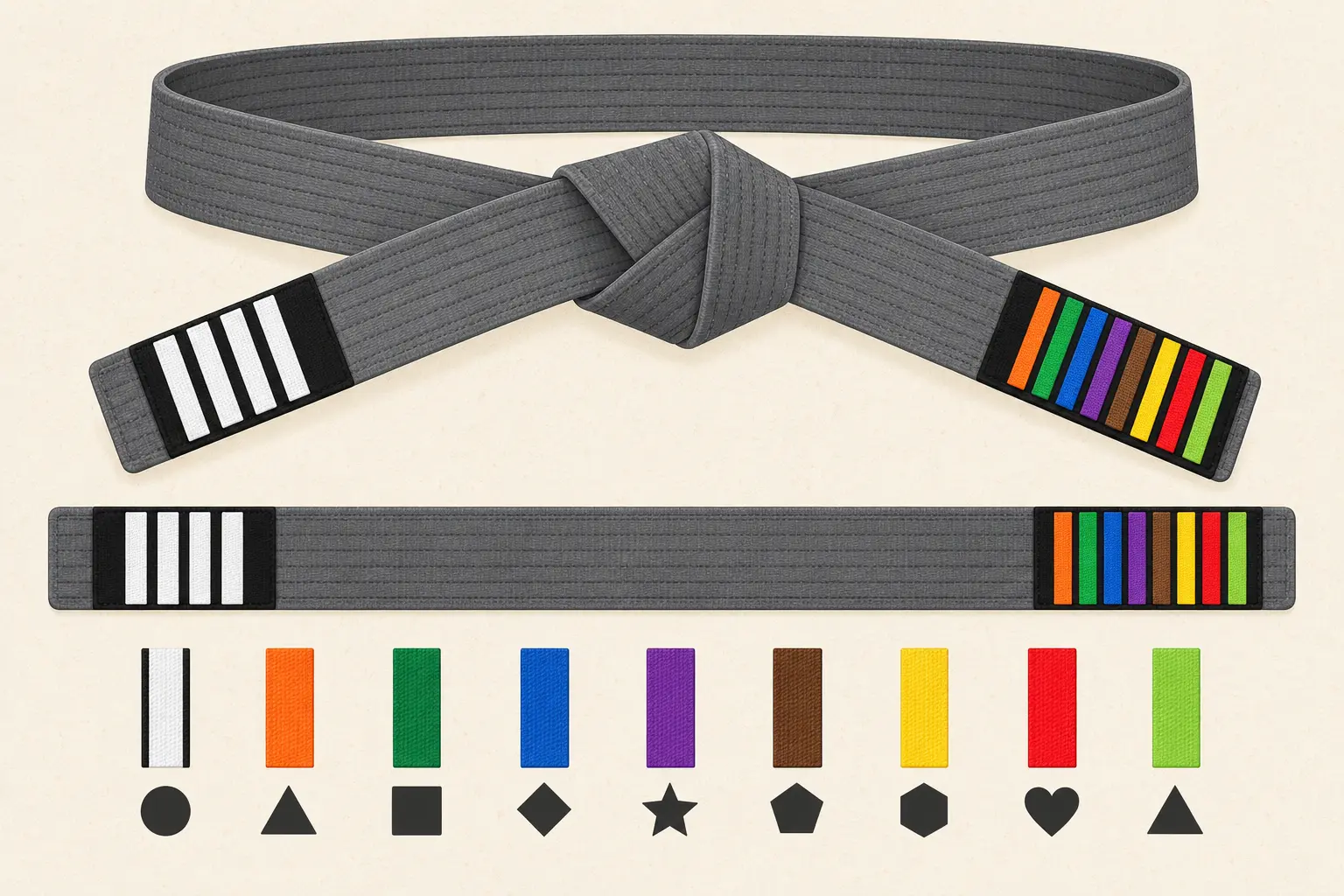
Not every stripe marks progress toward the next belt. We also recognise the things jiu-jitsu is really teaching.
White / black
Progression
Progress toward the next belt: the four stripes described earlier.
Orange
Discipline
Follows structure and routines without reminders. Kit and shoes organised. Raises a hand. Ties their own belt.
Green
Fitness
Strong effort, energy and resilience. Full participation in warm-ups. Finishes the hard parts.
Blue
Teamwork
Trains respectfully, encourages teammates, celebrates others and helps a partner improve.
Purple
Self-defence
Understands and applies essential personal safety skills, including the 3Ts: Tell, Talk, Tackle.
Brown
Focus
Listens carefully, sits properly, watches demonstrations and stays on task during drills.
Yellow
Leadership
Can be trusted with smaller or newer students. The first step toward assistant-level responsibility.
Red
Competition
Has competed for the first time, or shown real readiness and commitment to competition training.
Lime green
Extra time
Developing well but not yet old enough for the next belt. Recognises growth while they wait.
How life-skill stripes work
Recognition, separate from progression.
What you can do
Help them value the work.
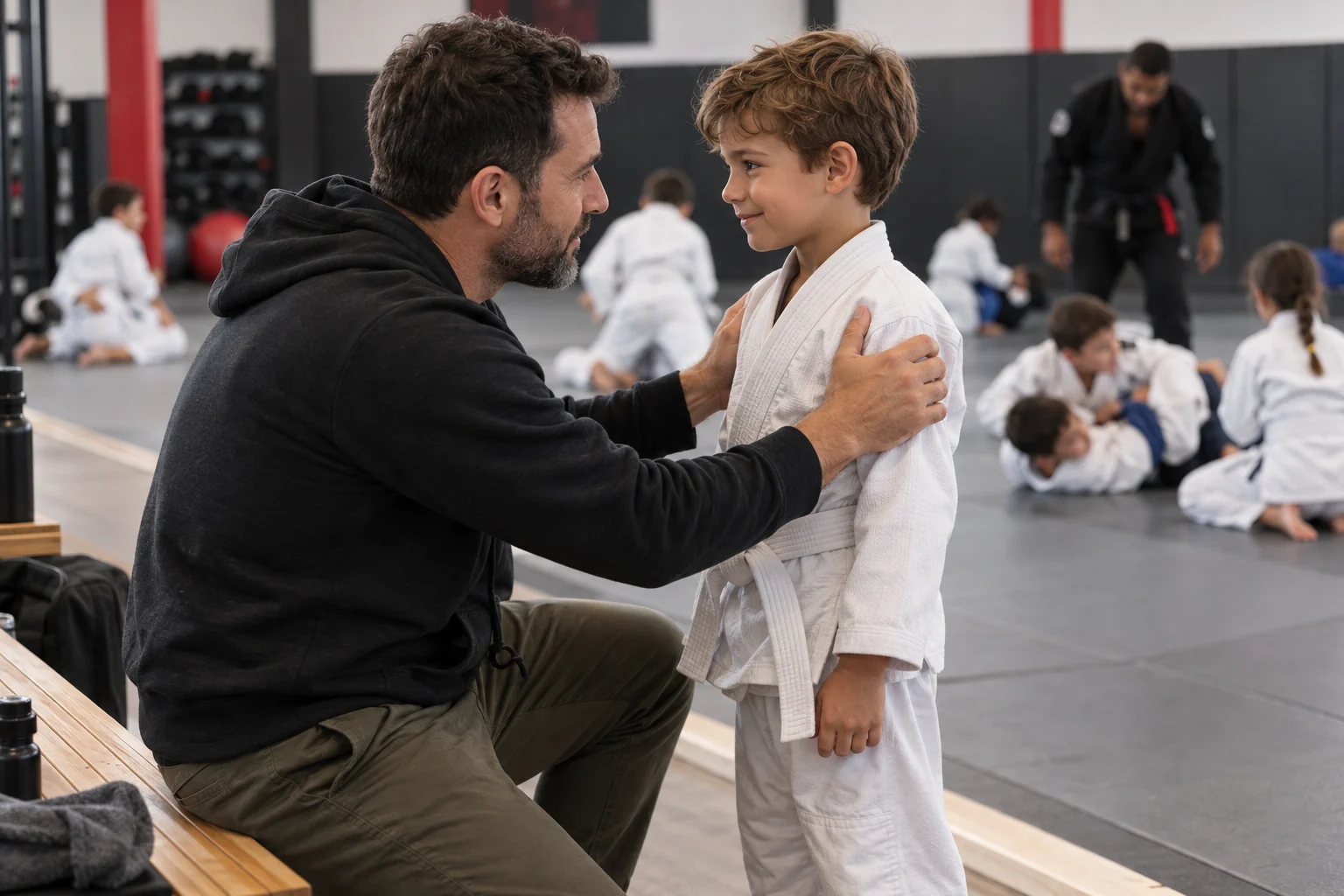
Bring them consistently.
Sessions on the mat matter more than months on the calendar. A child training twice a week for six months will be further along than a child training occasionally for a year. Consistency is the single biggest factor.
Talk about effort, not belts.
The children who do best long-term learn to value the work rather than the reward. You have more influence over that than we do.
Let disappointment pass.
A child who is not promoted has not failed. They have another opportunity to come back stronger. Some of the academy’s most valuable lessons arrive as temporary disappointment.
Ask us.
If you want to know what your child is specifically working on, ask their coach. We will always tell you. That is different from asking when the belt is coming.
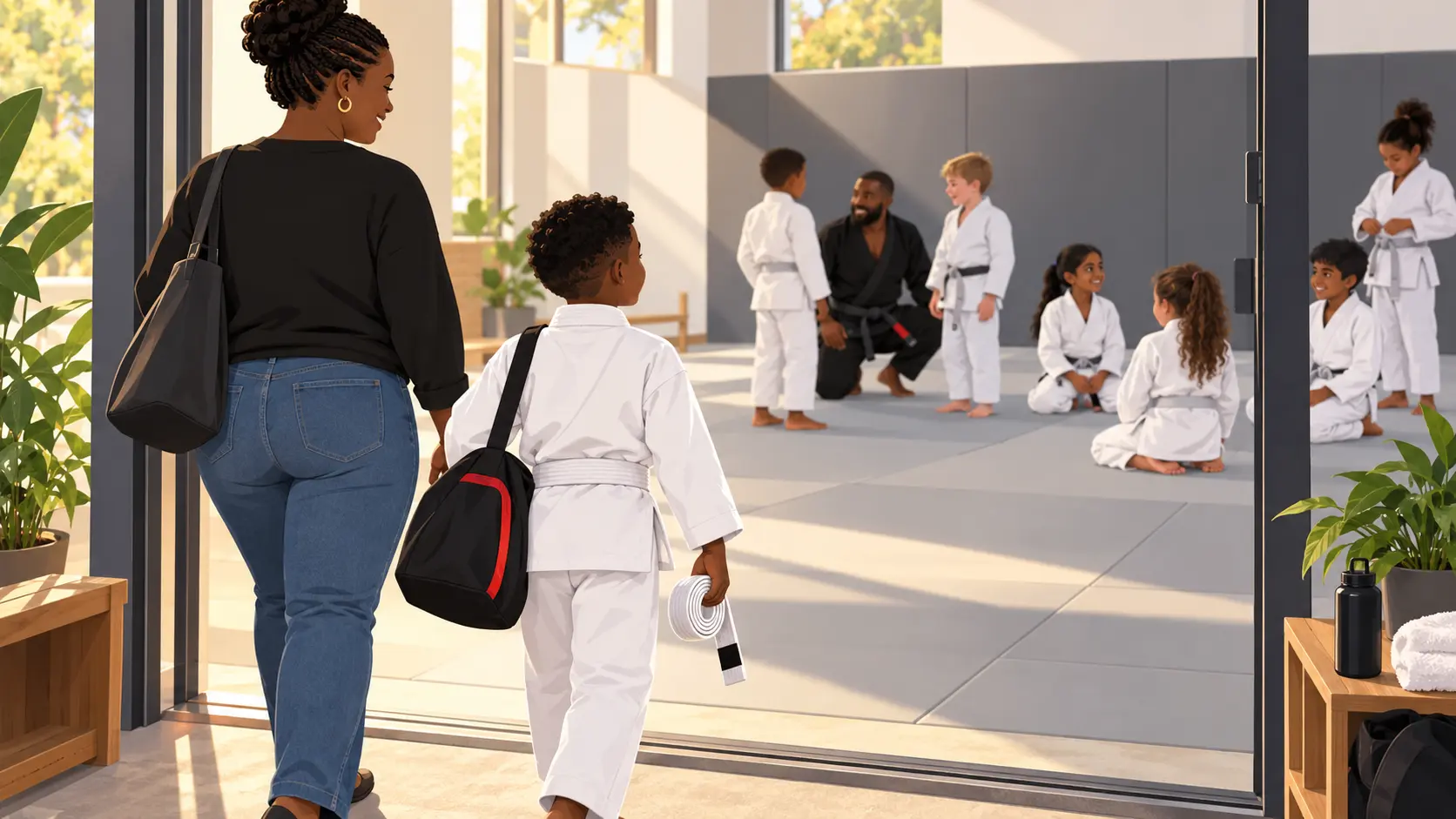
A final word
Why this matters to us
We made this change knowing it would be harder to run and harder to explain, because the easier system was quietly teaching children that progress arrives on a schedule.
Looking back at years of attendance and retention data, together with many conversations with families, we saw a clear pattern: children tended to stay in the sport longer before we introduced monthly striping. A striping system is not the only reason a child stays or leaves, but the pattern was too consistent for us to ignore. The monthly system placed too much emphasis on an external reward, the next stripe, and less on the internal motivation to improve and stay with the work.
That is not what we want them to take from jiu-jitsu. We want them to learn that the things worth having take time, and that the work still counts on the days nobody hands you anything.
If your child keeps showing up, listens, works and grows, we will see it. When the recognition comes, both you and your child will know it means something.